
Gangster Sahil Chauhan, wanted in multiple cases and subject to an Interpol Red Notice, has been deported from Thailand to India. This marks the fifth deportation secured by Haryana Police this year as they crack down on organised crime.

The CBI successfully managed to get Monika Kapoor extradited from the United States, ending her 25-year flight from justice. She is accused of economic offenses including forgery and fraud.

National Security Advisor Ajit Doval hosted Bangladesh Foreign Minister Khalilur Rahman for a dinner meeting, signalling efforts to repair bilateral ties after a period of heightened diplomatic tension.

A special court in Mumbai has issued notices to Nirav Modi's brothers, Neeshal and Nehal, asking them to explain why they should not be declared fugitive economic offenders in connection with the Punjab National Bank scam.

Fugitive businessman Vijay Mallya responds to criticism of his investment in Royal Challengers Bangalore (RCB) after the franchise was sold for nearly USD 2 billion.

Punjab Police is using intelligence-led policing and digital tools, including AI-powered voice recognition, to combat organised crime and dismantle gangster networks operating across states and continents.

'The people of Bangladesh have voted for a party that represents political interest.'
'It is a pro-Liberation party and it believes in the spirit of 1971, as opposed to the Jamaat-e-Islami, which was opposed to the Liberation struggle of Bangladesh in 1971.'

A leading British law firm has challenged the fairness and legality of the trial and death sentence handed down to deposed Bangladeshi Prime Minister Sheikh Hasina, citing violations of international law and a politically hostile environment.

The High Court of Justice in London has rejected a fresh bail petition filed by diamantaire Nirav Modi, who is wanted in India in connection with the Rs 13,000 crore Punjab National Bank (PNB) fraud case.

BNP chairman Tarique Rahman called for maintaining law and order and sought cooperation in building a safe and humane Bangladesh after his party's victory in parliamentary elections.
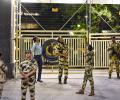
Tahawwur Hussain Rana, a Pakistani-born Canadian national accused of playing a role in the 2008 Mumbai terror attacks, has been extradited from the United States to India. Rana was arrested in the US in 2009 and convicted in 2011 for providing material support to the Lashkar-e-Taiba terror group, which carried out the Mumbai attacks. He had been fighting extradition since 2012, but the US Supreme Court ultimately denied his review petition, paving the way for his transfer to India. Rana will now face trial in India for his alleged role in the attacks, which killed 166 people.
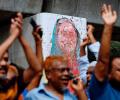
'What signal would we be sending -- that we don't stand by our friends?'

The Canadian government is seeking to revoke the citizenship of Tahawwur Rana Hussain, a Pakistan-born businessman accused of involvement in the 2008 Mumbai terror attacks, due to misrepresentation on his citizenship application.

The Congress party has claimed credit for the extradition of Tahawwur Rana, an accused in the 2008 Mumbai terror attacks, from the US, saying the Modi government did not initiate the process and merely benefited from the "mature, consistent and strategic diplomacy" begun under the UPA. Former Home Minister P Chidambaram said the government did not secure any breakthrough to make the extradition possible, nor is it the result of any grandstanding. He added that it was a testament to what the Indian state can achieve when diplomacy, law enforcement and international cooperation are pursued sincerely and without any kind of chest-thumping. Chidambaram detailed the UPA government's efforts in securing Rana's extradition, citing the registration of a case against him in 2009, diplomatic pressure on Canada and the US, and continued efforts despite legal setbacks. He highlighted the role of the UPA in securing Rana's conviction for other terrorism-related offences and the cooperation between the US and Indian agencies in gathering evidence and securing his extradition. The Congress leader further stated that it was the UPA's groundwork that paved the way for Rana's extradition, even after the change in government in 2014.
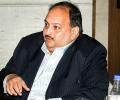
Absconding diamond jeweller Mehul Choksi has been detained in Belgium following an extradition request by Indian probe agencies for his alleged involvement in the Rs 13,000 crore PNB bank loan 'fraud' case, official sources said Monday. The action against the diamantaire was taken on Saturday.

The hugely significant development comes just days after Rana's last-resort attempt to evade extradition to India failed after the US Supreme Court justices denied his application, moving him closer to being handed over to Indian authorities to face justice in the dastardly attacks.

Mumbai terror attack accused Tahawwur Rana has moved an 'emergency application' with the United States Supreme Court against his extradition to India, claiming that he will be tortured there since he is a Muslim of Pakistani origin.
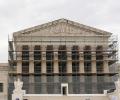
The US Supreme Court has denied the application of Tahawwur Rana, a Canadian national of Pakistani origin accused in the 2008 Mumbai terror attacks, seeking a stay on his extradition to India. Rana, currently detained in Los Angeles, had submitted the application after Associate Justice Elena Kagan initially denied it. Despite a renewed appeal, the Supreme Court ultimately rejected the request.

Muhammad Shahzeb Khan was charged with attempting to provide material support and resources to the Islamic State of Iraq and al-Sham (ISIS) terrorist organisation and attempting to commit acts of terrorism transcending national boundaries.

'Tarique Rahman's refrain during the electoral campaign was that the minorities are safe under BNP. He has to honour that promise.'

India is working closely with Belgium to extradite fugitive diamantaire Mehul Choksi, who was arrested in Antwerp on Saturday based on a formal request from the Indian government. Choksi is wanted by Indian probe agencies in connection with a Rs 13,500-crore bank loan fraud case involving the Punjab National Bank (PNB). His nephew, Nirav Modi, is also facing extradition proceedings in the UK.

'If this region destabilises, then we are not far away. This region should not destabilise.'
Bangladesh's interim government has called on India to extradite Sheikh Hasina after she was sentenced to death in absentia. The move has sparked reactions from various political parties.
The Indian government as respondent in Sanjay Bhandari extradition case has sought permission from the London high court to appeal against the discharge of the defence sector consultant wanted in Delhi to face charges of alleged tax evasion and money laundering.
Following the BNP's victory in recent elections, Bangladesh is seeking to reset its relationship with India, emphasizing mutual benefit and a recognition of the changed political landscape.
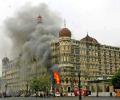
Tahawwur Rana, accused of involvement in the 2008 Mumbai terror attacks, is expected to be extradited to India from the United States soon. The US Supreme Court denied his last-ditch effort to stop his extradition, moving him closer to being handed over to Indian authorities. Rana's extradition is expected to help probe agencies expose the role of Pakistani state actors behind the attacks and shed new light on the investigation. He is associated with Pakistani-American terrorist David Coleman Headley, one of the main conspirators of the 26/11 attacks.

Sensitive issues remain. Water sharing of the Ganga and Teesta rivers. Treatment of minorities, particularly Hindus. Border management. Trade imbalances. Connectivity projects.What happens next will shape not just bilateral ties, but the balance of South Asia itself, points out Ramesh Menon.

'The unexpected turn of events and assertion of sovereignty by the Taliban has baffled the Pakistan security establishment.'

The FBI is offering a reward for information about an Indian national wanted in connection with the 2017 murder of an Indian woman and her son in New Jersey. US authorities are urging India to extradite the suspect, Nazeer Hameed.
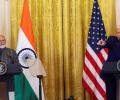
United States President Donald Trump on Thursday announced the extradition of the 26/11 Mumbai terror attack accused Tahawwur Rana to India and said he will face justice.
Tahawwur Rana, accused in the 2008 Mumbai terror attacks, has renewed his application to the US Supreme Court seeking a stay of his extradition to India. The Supreme Court will hear the application next month. Rana, currently detained in Los Angeles, claims his extradition would violate US law and expose him to torture in India due to his health and Muslim background. The US government has denied these claims and authorized his surrender to India, citing the Extradition Treaty between the two countries. The Supreme Court's decision will determine if Rana will face justice in India or remain in the United States.
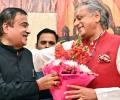
Senior Congress leader Shashi Tharoor welcomed the extradition of Tahawwur Hussain Rana, a key accused in the 26/11 case, and said everyone associated with the conspiracy of the Mumbai terror attacks must face the court of justice. He described Rana's extradition as a "step forward for justice." Rana, a Pakistan-born Canadian national and close associate of David Coleman Headley, is being brought to India after his last-ditch attempt to evade extradition failed. Tharoor expressed hope that the interrogation of Rana would provide more details about the Mumbai attacks and said he was "very glad" that Indian authorities managed to get Rana's custody.

Indian authorities have requested additional information from the United States based on the interrogation of Tahawwur Rana, an accused in the 2008 Mumbai terror attacks. The request was made through the Mutual Legal Assistance Treaty (MLAT).

In O'Romeo, Shahid Kapoor plays dreaded gangster Hussain Ustara, whose life has been touched upon in S Hussain Zaidi and Jane Borges' book Mafia Queens.

The Supreme Court of India has affirmed the country's right to bring back offenders who are evading the law, dismissing a plea seeking withdrawal of an extradition request.
Tahawwur Rana, accused in the 2008 Mumbai terror attacks, has renewed his plea for a stay on his extradition to India, citing health concerns and alleging potential torture. He argues that his extradition would violate US law and the UN Convention Against Torture. Rana's lawyers claim he is at risk of being subjected to torture in Indian detention facilities due to his Pakistani origin, Muslim religion, and medical conditions. The US Supreme Court had previously denied his emergency bid for a stay, but he has now appealed to Chief Justice John Roberts. The US government has declined to provide information on any commitment from India regarding Rana's treatment, further fueling his concerns.

A Bangladesh court has convicted former Prime Minister Sheikh Hasina and British MP Tulip Siddiq in a land scam case, sentencing them to imprisonment. The verdict also includes other government officials and Hasina's sister, raising questions about extradition and political motivations.
A Delhi court has sought the trial records of the 26/11 terror attack from a Mumbai court ahead of the expected extradition of the crime's alleged mastermind Tahawwur Hussain Rana to India from the US. The US Supreme Court has cleared the way for Rana's extradition, dismissing his final legal challenge against the move.
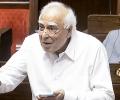
Rajya Sabha MP Kapil Sibal has congratulated both the previous UPA government and the current dispensation for the extradition of Tahawwur Hussain Rana, the mastermind behind the 2008 Mumbai attacks. Sibal expressed confidence that the extradition will shed light on the involvement of individuals within Pakistan's establishment in the attacks. Rana is being questioned by the National Investigation Agency (NIA) to uncover the full extent of the conspiracy behind the deadly 2008 terror strikes. Sibal highlighted the efforts of the UPA government in establishing the NIA and pursuing Rana's extradition, and also acknowledged the current government's success in bringing him back to India. The interrogation is expected to focus on Rana's potential ties to the Lashkar-e-Taiba (LeT) and his role in the Mumbai attacks.
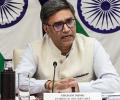
The United States has approved the extradition of Tahawwur Rana, accused of involvement in the 2008 Mumbai terror attacks, to India. The decision was announced by President Donald Trump during a joint press conference with Prime Minister Narendra Modi in the White House. India is currently working on the logistics of Rana's surrender and extradition, with several final steps to be completed before he is sent back to India. The joint statement issued by India and the US during Prime Minister Modi's visit reaffirmed their commitment to fighting terrorism and eliminating terrorist safe havens. The leaders also called on Pakistan to bring to justice the perpetrators of the 26/11 Mumbai and Pathankot attacks. Rana, a Canadian national of Pakistani origin, is currently lodged at a metropolitan detention center in Los Angeles. He is associated with Pakistani-American terrorist David Coleman Headley, one of the main conspirators of the 26/11 attacks.
